← All projects

AI & automation builds

Ten production agents and workflows. Each one replaces a process that was previously manual, expensive or error-prone — built on the same rule: understand the data before you build anything on top of it.

LangChainn8nAgentic AIRAGVector DatabasesPostgresAPI Integration
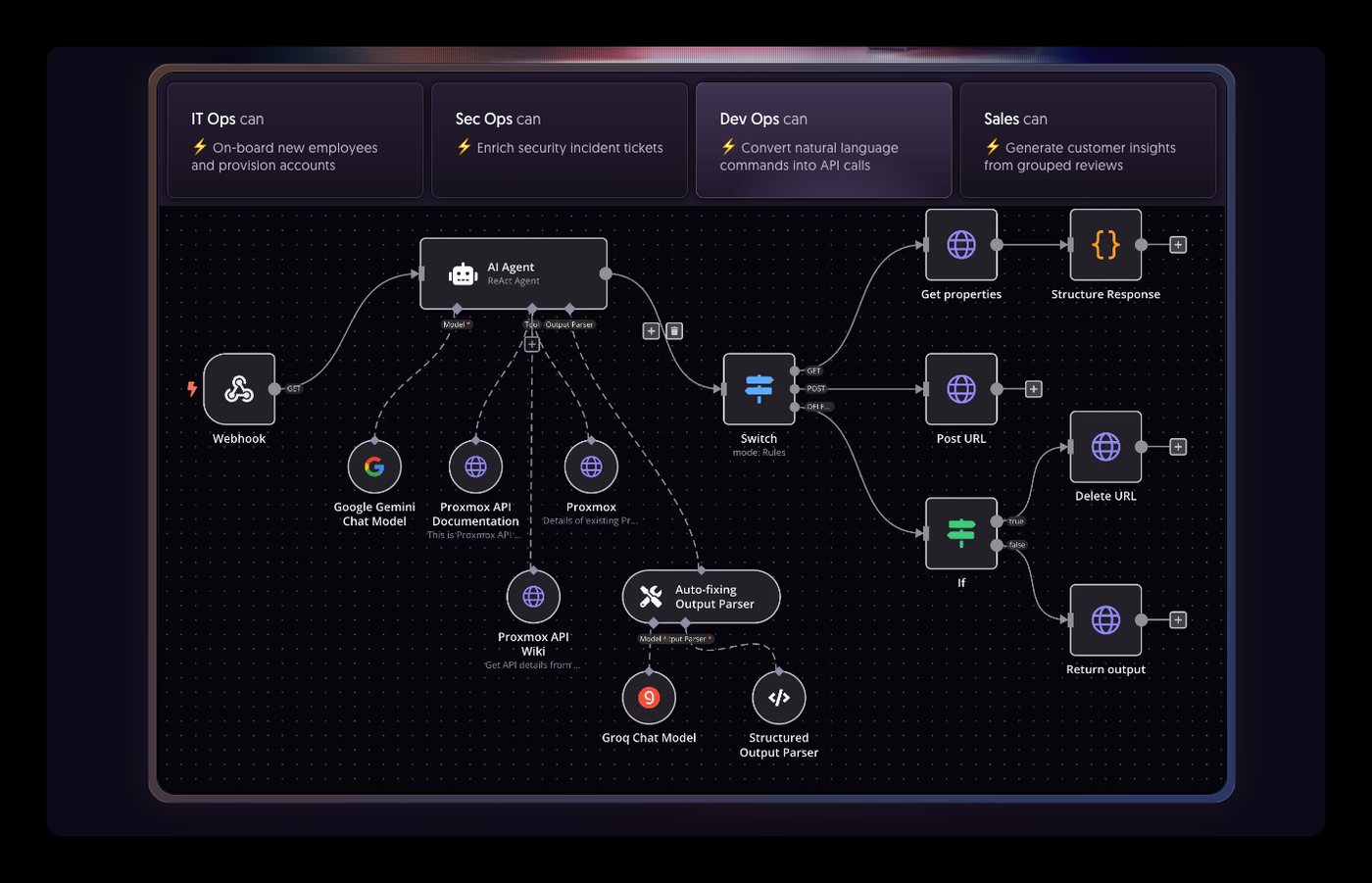
Multi-Department Infrastructure AI Agent — workflow architecture
Multi-Department Infrastructure AI Agent
01

Multi-Department Infrastructure AI Agent

Problem
Different teams — IT, Security, DevOps, Sales — often need separate tools for tasks that are all, at their core, "take a request and act on it."
What I built
A single webhook-driven agent that takes plain-language requests and reasons through what's being asked: onboarding an employee, enriching a security ticket, converting a command into an infrastructure API call, or summarizing customer feedback. It references live API documentation to stay accurate and uses an auto-fixing output parser to catch malformed responses before they reach any system.
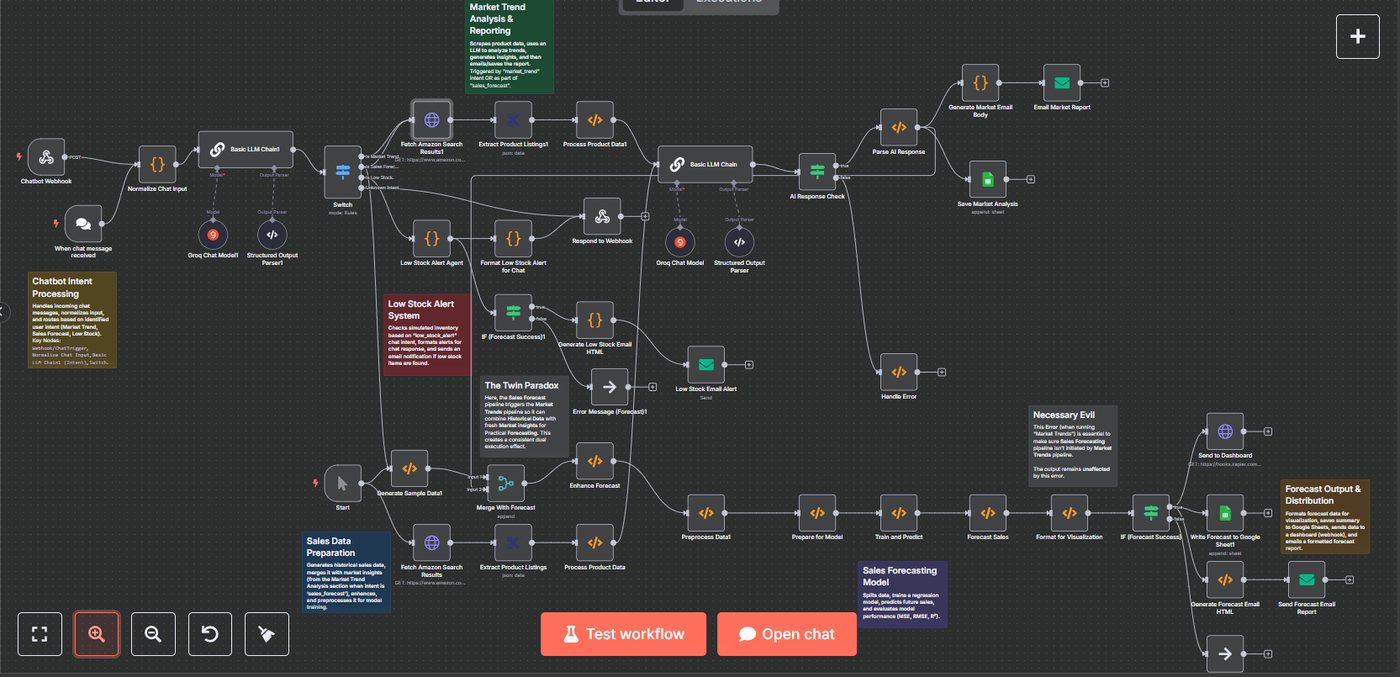
AI Sales Forecasting & Market Intelligence Agent — workflow architecture
AI Sales Forecasting & Market Intelligence Agent
02

AI Sales Forecasting & Market Intelligence Agent

Problem
Getting market trends, sales forecasts and stock alerts usually means switching between a scraping tool, a forecasting model and a reporting dashboard separately.
What I built
A single chat-based agent that handles all three. Market trend requests scrape live product data and return an AI-generated summary, forecast requests run a regression model trained on historical and market data and report accuracy through MSE, RMSE and R², and low-stock conditions trigger automatic alerts — all from one interface.
Multi-Agent Content & Operations Orchestrator — workflow architecture
Multi-Agent Content & Operations Orchestrator
03

Multi-Agent Content & Operations Orchestrator

Problem
Managing email, content production, social posting and scheduling across separate platforms adds hours of manual coordination every week.
What I built
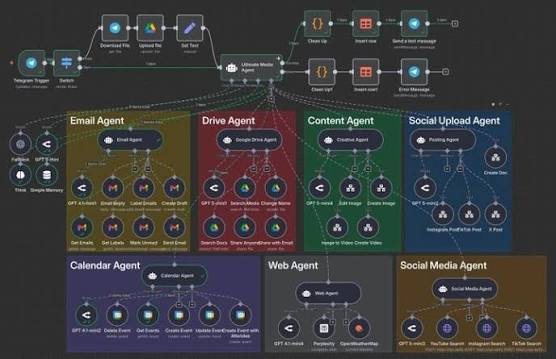
A central orchestration agent that receives requests through Telegram and routes each one to the right specialist agent — email, content, social upload, calendar and others — each running its own toolset. It functions as a coordinated operations team behind a single conversational interface.
AI Executive Assistant with Memory & CRM Integration — workflow architecture
AI Executive Assistant with Memory & CRM Integration
04

AI Executive Assistant with Memory & CRM Integration

Problem
Most conversational assistants lose all context between sessions, making them impractical for ongoing work like scheduling, task tracking or research logging.
What I built
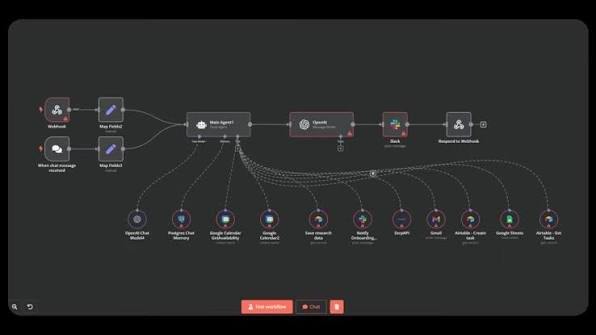
An assistant backed by persistent Postgres memory that holds context across sessions while checking calendar availability, creating events, managing CRM records in Airtable, sending emails and posting updates to Slack — all from one continuous conversation.
Scout Agent — Automated Lead Discovery & Scoring — workflow architecture
Scout Agent — Automated Lead Discovery & Scoring
05

Scout Agent — Automated Lead Discovery & Scoring

Problem
Sourcing leads manually across multiple platforms is slow, inconsistent and easy to fall behind on.
What I built
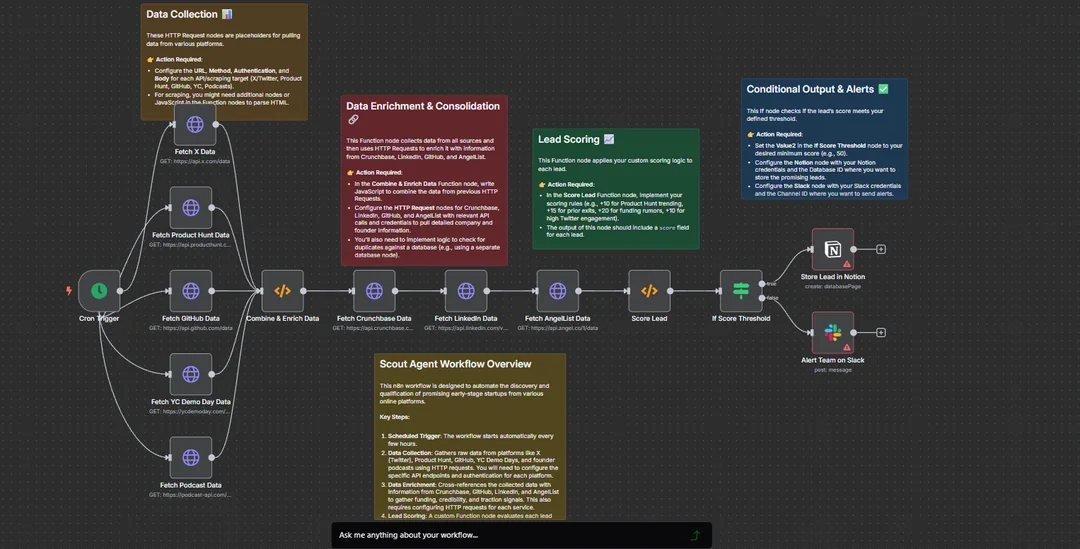
A scheduled agent that pulls founder and startup data from six sources (X, Product Hunt, GitHub, Crunchbase, LinkedIn, YC Demo Day), scores each lead against weighted criteria like funding stage and engagement, and logs anything that clears the threshold into Notion while pushing an alert to Slack — replacing manual sourcing with a continuously running pipeline.
Website-to-RAG Ingestion Pipeline — workflow architecture
Website-to-RAG Ingestion Pipeline
06

Website-to-RAG Ingestion Pipeline

Problem
RAG chatbots and internal search tools are only as good as the knowledge base behind them, and keeping that current usually means someone manually re-scraping and re-uploading content.
What I built
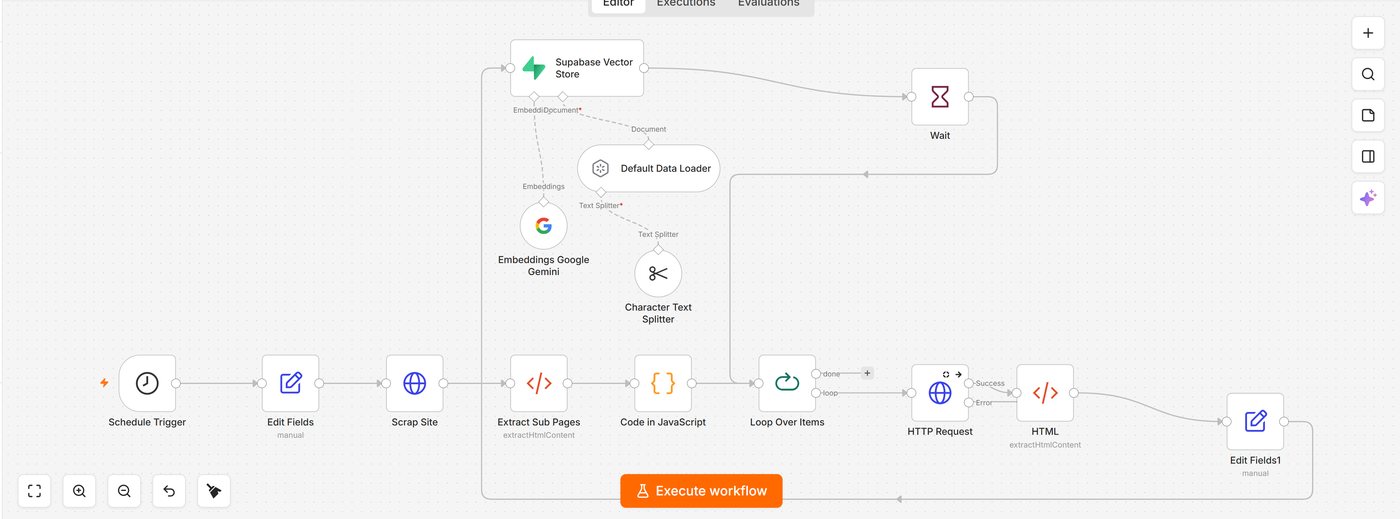
A scheduled pipeline that crawls a target site, extracts clean content from every sub-page, chunks and embeds it, and stores it in a Supabase vector database ready for retrieval. It includes automatic retry handling so one slow or failed page never breaks the run, keeping the knowledge base current with no manual work.
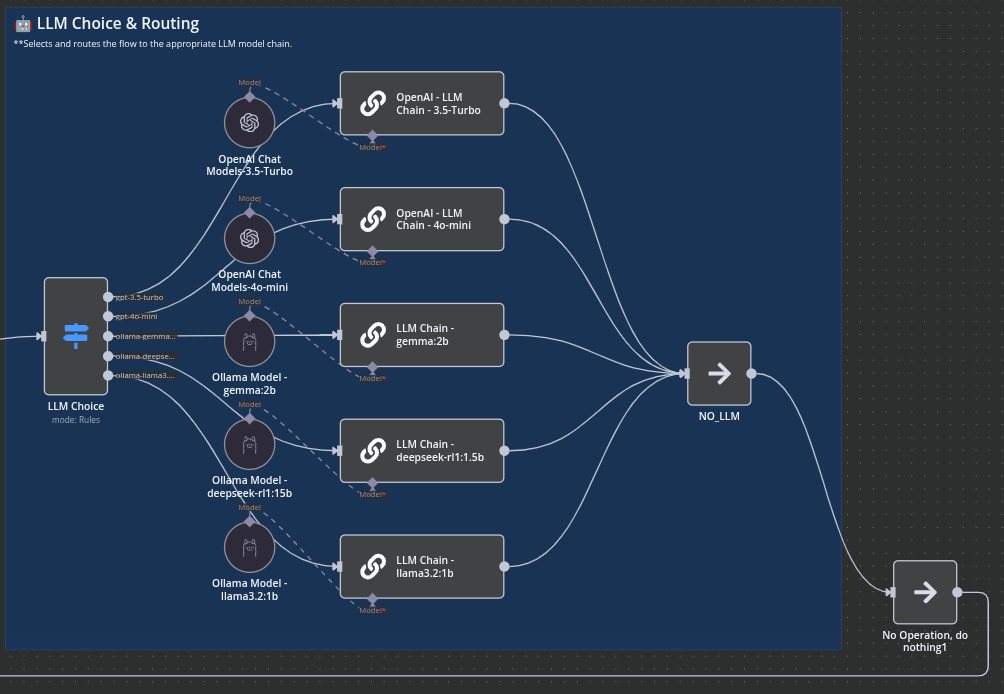
Dynamic LLM Routing System — workflow architecture
Dynamic LLM Routing System
07

Dynamic LLM Routing System

Problem
Running every request through the same high-cost model wastes money on tasks that don't need that level of capability.
What I built
A routing system that sends heavier requests to GPT-3.5-Turbo or 4o-mini and lighter ones to a local Ollama model (Gemma, DeepSeek or Llama 3.2) running at no per-call cost — matching model spend to what each task actually requires instead of paying frontier pricing across the board.
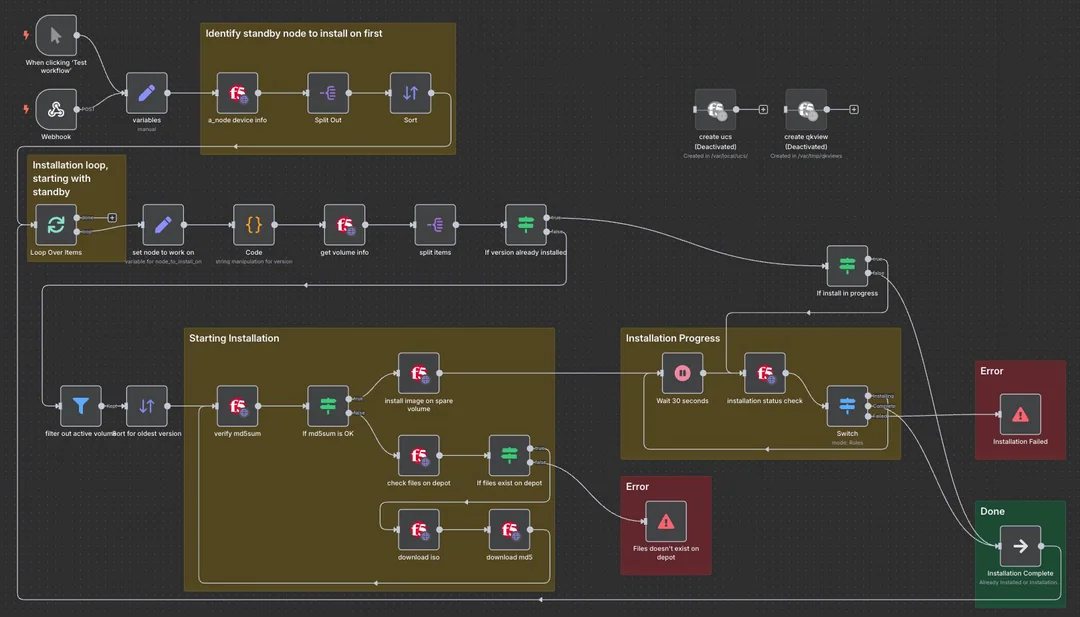
Automated Network Device Installation System — workflow architecture
Automated Network Device Installation System
08

Automated Network Device Installation System

Problem
Rolling out an OS image across a fleet of network devices is risky. If the image is bad and reaches the whole fleet before anyone notices, it can take down infrastructure.
What I built
A staged deployment workflow that installs on a single standby device first, verifies file integrity with an MD5 checksum before anything runs, and only proceeds to the rest of the fleet once that install is confirmed clean. Failures route to a dedicated error path instead of spreading further.
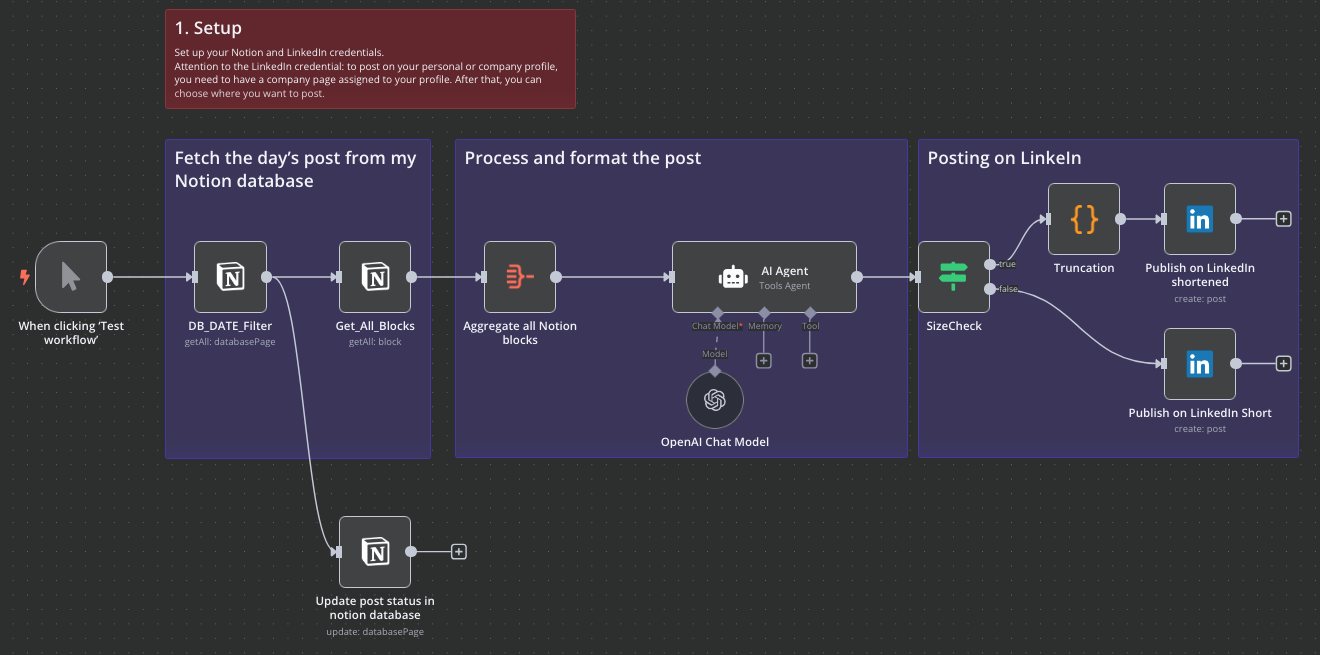
Notion-to-LinkedIn Auto Publisher — workflow architecture
Notion-to-LinkedIn Auto Publisher
09

Notion-to-LinkedIn Auto Publisher

Problem
Managing a content calendar in Notion but publishing manually on LinkedIn means someone has to copy every post over by hand and track what's been posted separately.
What I built
An automation that pulls the day's scheduled post from Notion, reassembles the content and runs it through an AI agent for formatting. A size check shortens anything over LinkedIn's limit before it publishes directly, then writes the status back to Notion — so there's one place to see what's live and what's queued.
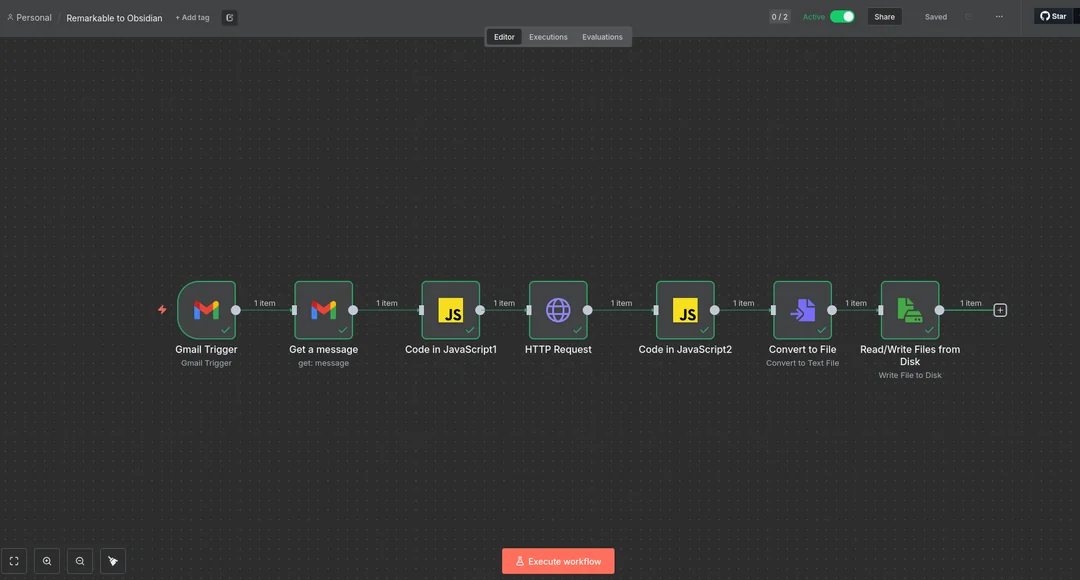
reMarkable-to-Obsidian Sync Pipeline — workflow architecture
reMarkable-to-Obsidian Sync Pipeline
10

reMarkable-to-Obsidian Sync Pipeline

Problem
Notes taken by hand on a tablet stay stuck there unless someone manually exports and reformats them before they're usable elsewhere.
What I built
An automation that watches an inbox for note exports, extracts the content through custom parsing logic, converts it to structured markdown and writes it directly into an Obsidian vault. The manual export-and-reformat step is gone entirely.

Have a process that's still fully manual?

Let's work out whether it's worth automating, and what it would actually take.